
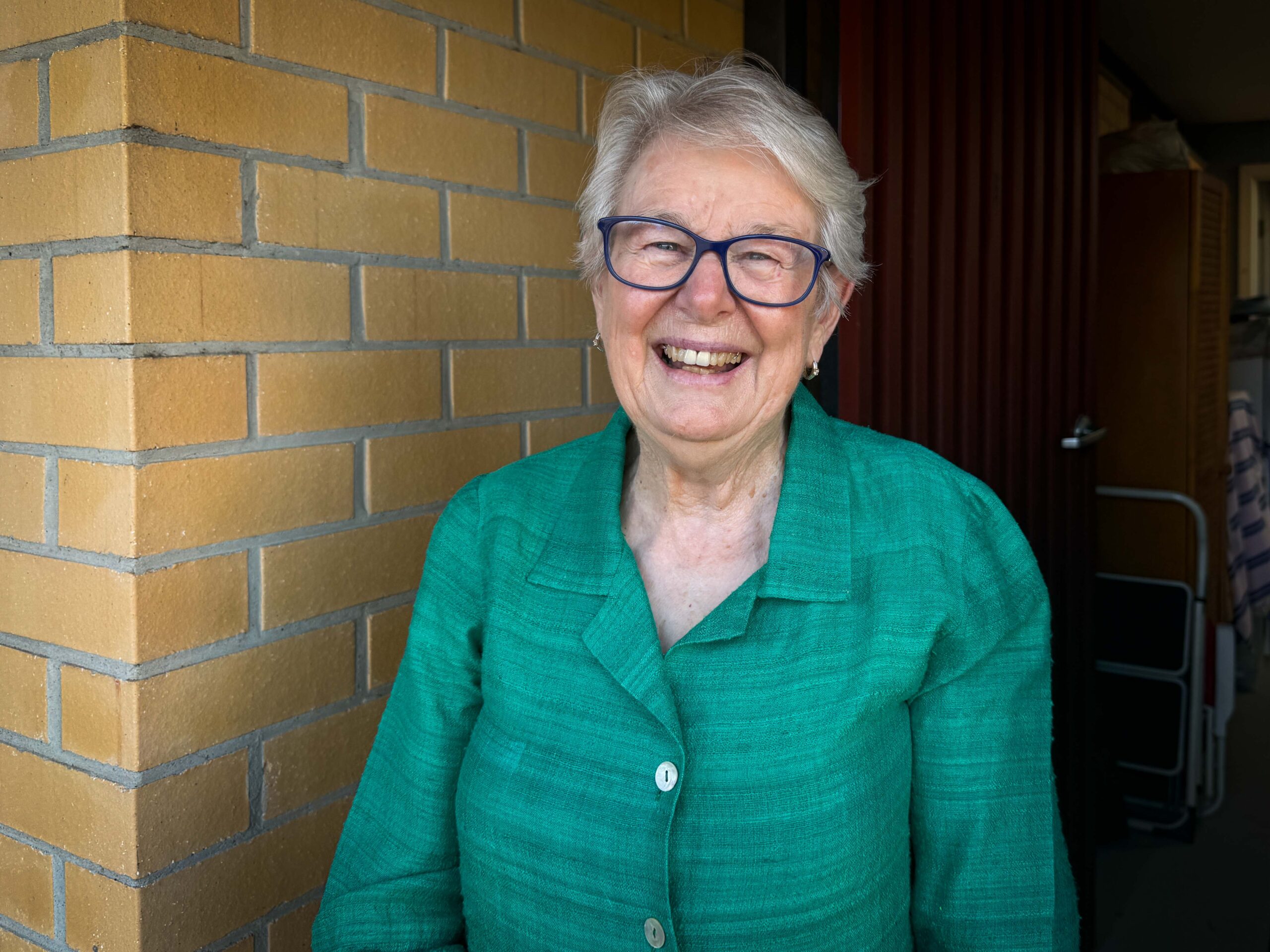
In this QnA, Berandette Wallis MSS shares how she came to be working in the MSS archives, and what it has come to mean for her.
How did you start working in the MSS archives?
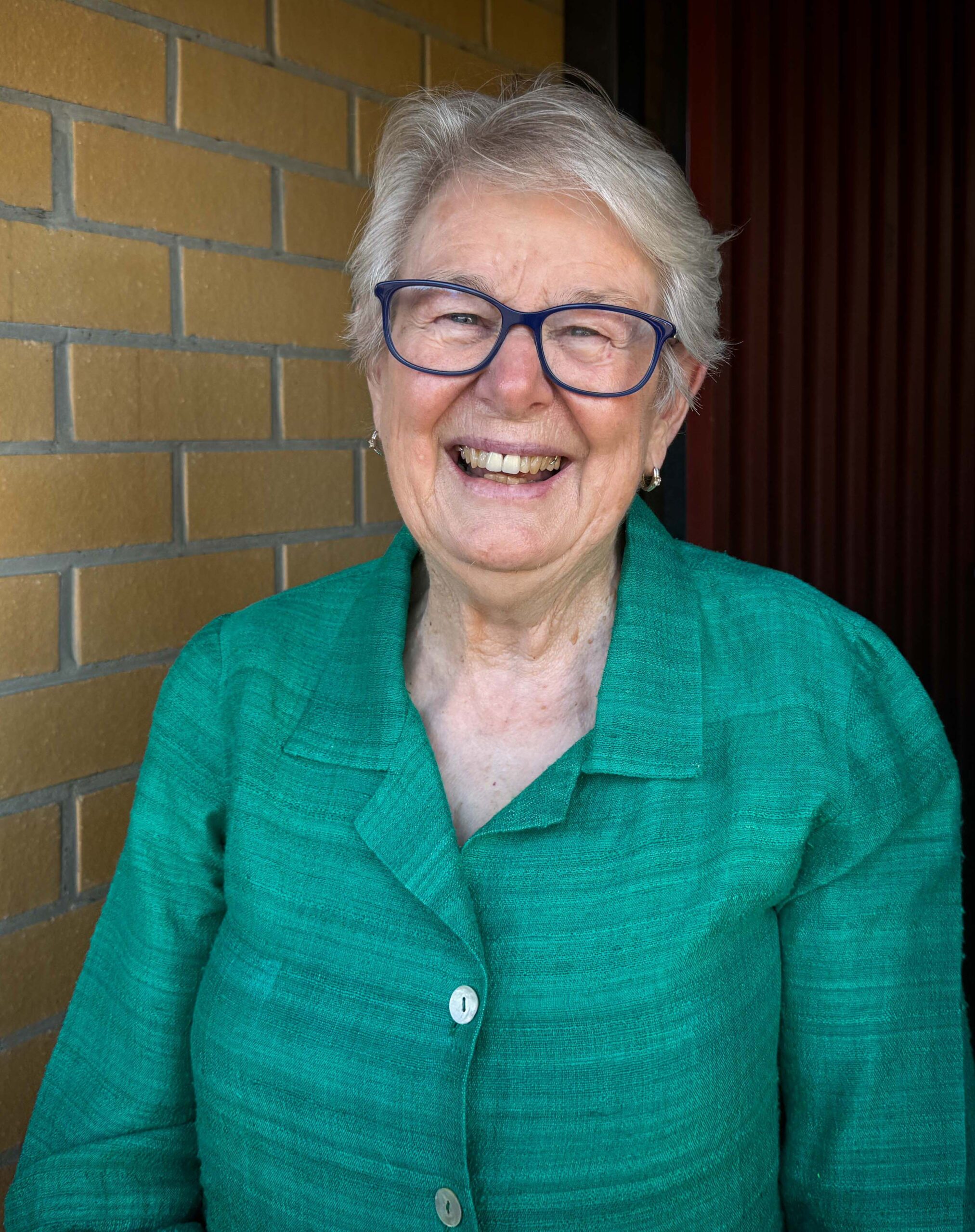 I could never have imagined in my early life that, at this stage, in my mid-evening of life, I’d be engrossed in the archives of our congregation, the Missionary Sisters of Service (MSS), and talking with archivists and others from religious congregations and other organisations about them. That has simply come into my pathway. Through life, I’ve realised I’ve always had an interest in history and an appreciation of history for its inspirational stories, and can help to understand our past, present, and how they can point to our future.
Some years ago, I wrote these words in the Introduction of my book Dear Mother, Dear Father: History is a gift from which to understand and attempt to make sense of our past and our present, often helping us make resolutions and decisions, even unconsciously, and move into a hope-filled future.
However, the archive profession needs more than an interest in history. Regarding the MSS archive, Carmel Hall MSS (pictured below) had been our archivist in Hobart since her early days in the congregation in the 1960s. She had a flair for the work of an archivist—for detail of recording, conservation, and preservation, and for placing that detail within the context of the whole. Carmel retired from the role in 2018 and died in 2021, but in previousyears, I would occasionally offer support for some days when I visited Tasmania. Carmel taught me a lot and gave seminars on archives, so I learnt some of the basics, such as the need to de-staple documents because of rust! There is not one staple in the archives now—we hope! We use pencil and never a ballpoint because the ink can ruin a document over time. Most plastics sticky tape are a no, no! She taught me how to handle items with care and how to organise, date, and order papers. This background helped me when I came into the work, and I’ve learnt a lot more since then!
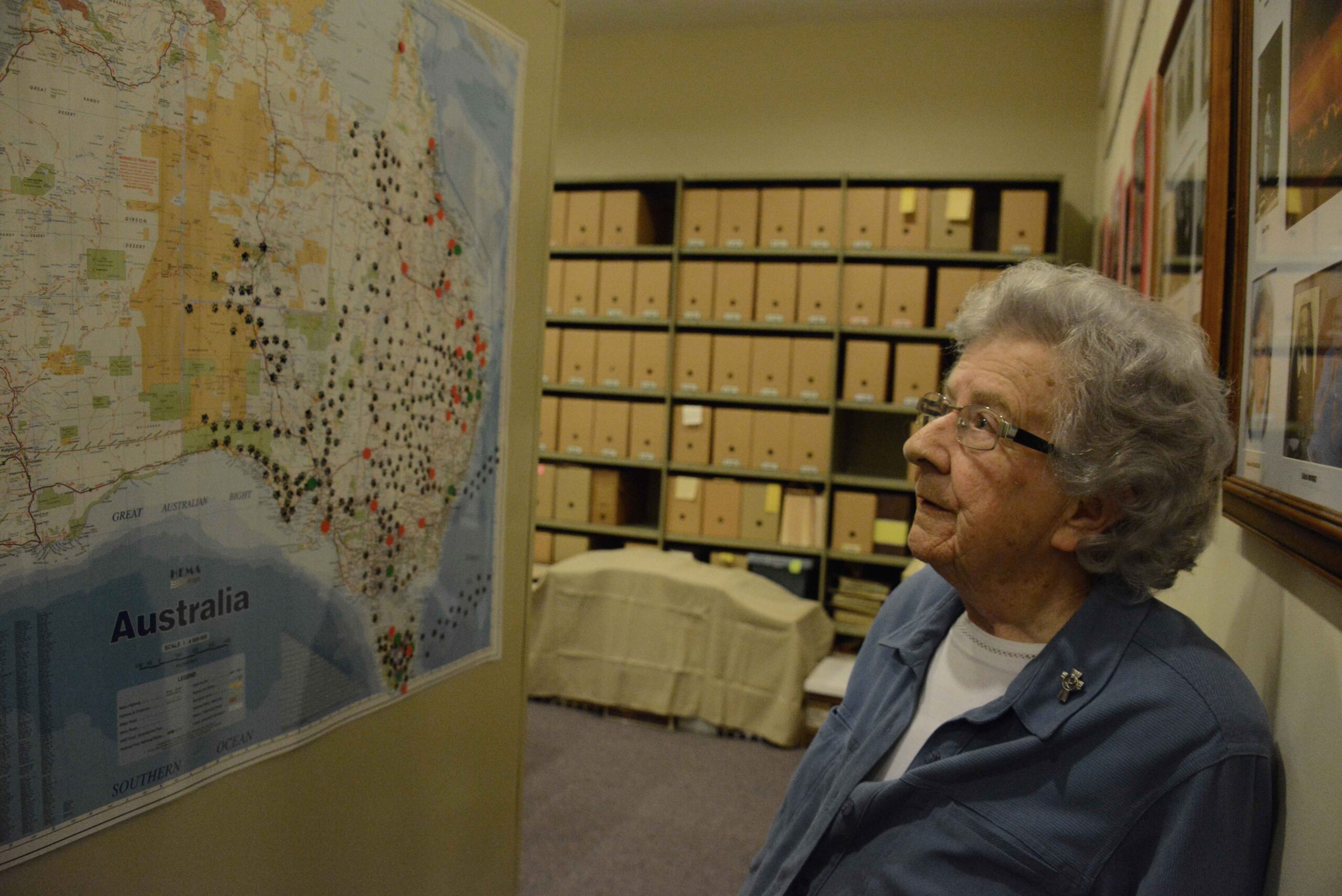
Carmel Hall MSS (deceased) in the previous home of the archives, The Wallis Centre in Hobart. Photo by Fiona Basile
Given we’re an ageing congregation, I am conscious that our congregation is coming to completion and we are preparing for that eventuality. Because the congregation is an entity within the Catholic Church, Canon Law requires religious congregations to keep and provide for their archives for 100 years, hopefully into perpetuity. A lot of our archival work needed to be done, and arrangements need to be put in place for the preservation, care, and stated purpose of our archives in the future as well. It is our treasured heritage and a valuable legacy, not in terms of finance, but of heart, soul and spirit. That has catapulted me into getting the job done.
What is in the archives?
Our archive has three main sections: Father John’s marvellous archives (he kept all his papers or they were channelled into Carmel’s ambit!); the Missionary Sisters of Service archives that give us wonderful insight into the early days of the congregation; and Highways and Byways, which holds the more recent record of its outreach to many people and communities in Australia.
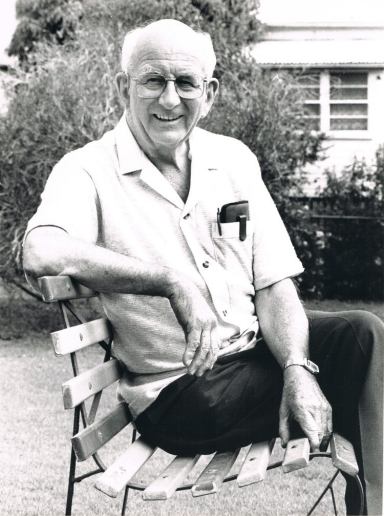
Fr John Wallis (deceased). Photo: MSS Archives
Father John’s archives include a significant collection of his letters and writings. Father John was a habitual letter writer, and many of his letters have been carefully preserved, scanned, copied, and transcribed. We have copies of the correspondence he had with the Sisters of Service in Canada prior to the beginning of our congregation, books he used in the early days, his Scripture, liturgical and sacramental notes from the post-Vatican II period, and other materials that reflect his theological thinking and the depth of his spirituality and prayer. There are also personal items, such as his bushwalking backpack and shoe-cleaning kit! Among the treasures is the original letter he wrote to Sister Vianney (Kath Moore) inviting her to consider joining the initial group of women in 1944, along with her reflection on that letter 40 years later. These materials offer a rich insight into Father John’s hopes and dreams at the time of the early foundations of the congregation. For this reason, we are hoping to engage someone to write a biography of Father John in the near future. (The John Wallis Library is still in Tasmania and after time-consuming recording of each book was donated to the Archdiocese of Hobart Archives at The Wallis Centre.)
The MSS archives hold records that show the life and development of the congregation. There are the formal circular letters to the sisters written by congregational leaders in each period of their leadership, including those of Teresa Morse MSS, our first woman to respond to the dream of Father John and the first congregational leader (or Mother General as she was known at the time). These give insight into the early life of the congregation as sisters began to spread from Tasmania into other parts of Australia. The archives also hold formal documentation, early constitutions, diaries from Day one, and papers of the formal chapters when we gathered to make decisions on the direction for our life and work. There are handmade prayer books prepared by the early sisters, and artefacts such as paintings, liturgical items, and two tabernacles, the tabernacle from the caravan the sisters travelled in during the 1950s and a specially designed tabernacle for the principal house following Vatican II. Of course, there are photos. However, the archive holds mainly papers—chapter, mission and community reports, minutes of various meetings, correspondence of all descriptions and letters typed and hand-written, when letter-writing was the norm. Together they all show the unfolding story of the congregation.
What has been the impact for you of being immersed in the archives?
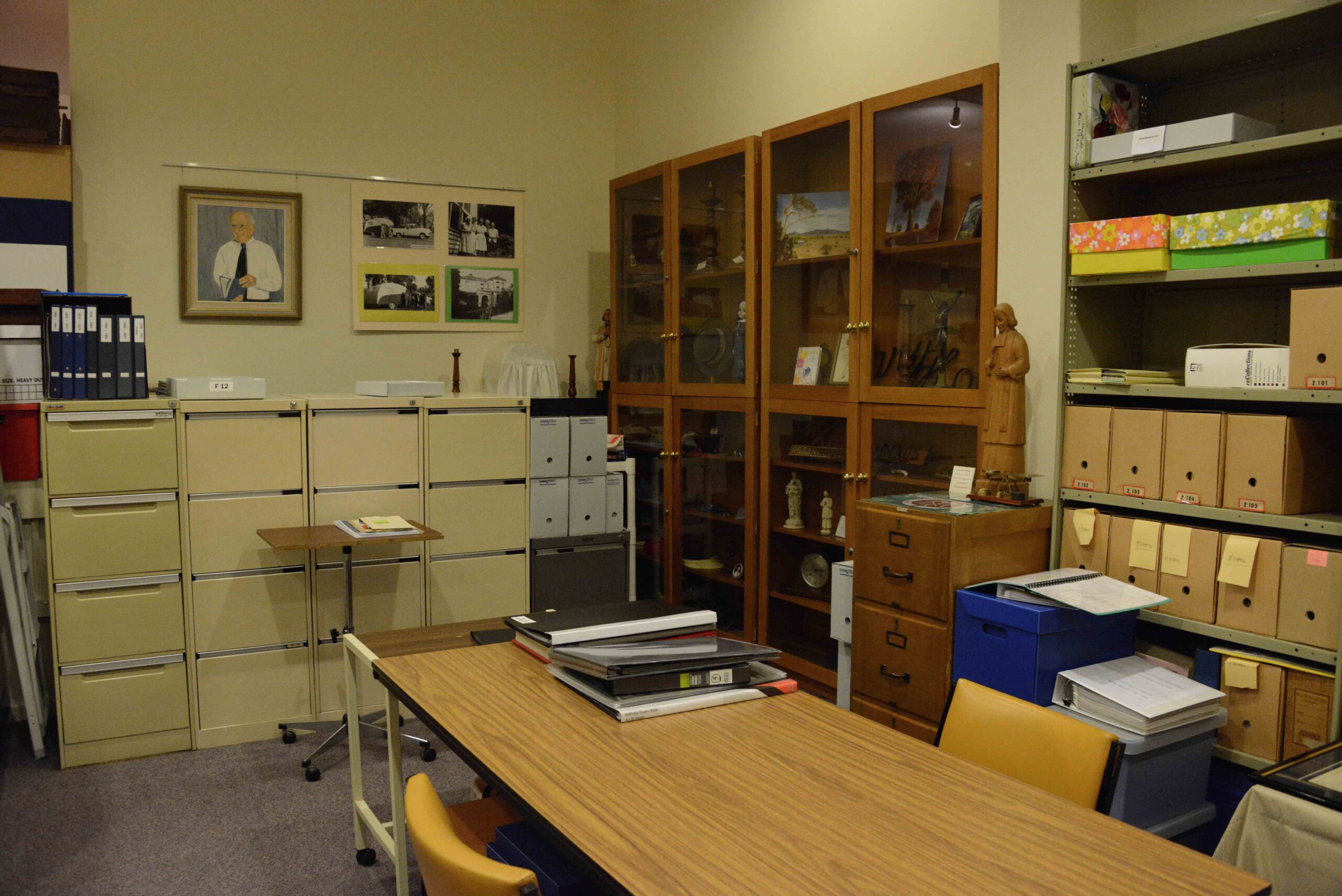
Some of the archival material that had been located in The Wallis Centre, Hobart. Photo: Fiona Basile
For me, it is a sacred privilege. Coming into the archives has also reawakened me to my life story of 60-plus years with the MSS—my growth, development, and diversification in mission just as they show the growth and development of the fledgling congregation, revealed from its embryo into fullness and now coming to near completion. I have come to appreciate the value of archives, knowing the importance of archives, and understanding the responsibility of archival work. I am proud of our congregation and can see how important it is that the archive is well established and provided for. I hold the archives gently.
In the past volunteers have also worked on projects in the archives and have done a fabulous job. We owe a debt of gratitude to them. Now we have two volunteers who work on projects, Corrie van den Bosch MSS and Mary Williams who still taking up tasks to complete. To them, we owe thanks too.
Mary, one of our longer-time archivist volunteers, recently shared that she felt privileged to sit in the archives because not having known the sisters and their work in earlier times, and through working with the material she has come to know the spirit of the congregation. She is enamoured with the work of the sisters, including the correspondence school for children and families, as well as adult formation correspondence courses on Scripture, theology and catechetics, and the mission to parishes in rural and outback areas, together with the constant visiting of families. She spoke of the reading—noting the regular reading material sent to the sisters, which contributed to their ongoing formation and kept them up-to-date, especially following Vatican II. She saw how the mission changed and diversified during the growth and development of the congregation. The newsletters and the newspaper articles written about Father John and the sisters, and the circular letters of John all helped bring their story to life.
Seeing it all together in the archives, she said, was an amazing privilege. Mary spoke of being drawn into the spirituality and charism of the congregation, drawn to the MSS like a moth to a flame because of the humility and inclusiveness she could see reflected in the material – and how they recognised the love of God for all. The first constitutions stated that the first law was that of love – the supreme law is charity (Suprema lex Caritas as John used always say.)
How will you have the archives cared for in the future?
We understand our archives to be a valuable resource of knowledge for people in the future. This resource could be made more accessible and available. Besides our MSS archives and their care in the future, a much bigger vision is in place.
After speaking with other religious congregations and faith groups, we have realised that there is a need for an archive that could hold all our archives, especially those of smaller organisations that do not have the capacity to have an archive of their own. These groups have archives that require not only storage but a centre where they can be kept and accessed appropriately into the future. This has led to the establishment of the Australian Religious Archive (ARA).
Without such collaboration with others, the archival history could easily be lost. As with other religious congregations, we have a responsibility to share our part of the overall story, the story of all our women and the impact in the church, society and the world. They have been women who have always been there noticing the forgotten and disadvantaged people. They helped build systems of education and health, contributed to social services, social justice and social cohesion, carried out many works of pastoral mission, and have been there advocating for the care of our planet, our environment, befriending all, and calling for peace in our world. The vision extends even more – beyond Catholic religious women and men to include lay groups, other Christian traditions, and other faith groups.
We have been negotiating with the University of Divinity for some time. They have agreed to work with us to bring the vision to fruition. They have agreed to manage, administer, and care for the archives into the future and to act as a conduit for appropriate research and access according to the directives of each organisation and the archival policies that are in place. They hold stories, understandings of different charisms, spiritualities and descriptions of the works that all contribute to the story of our shared history and to the wider Church story and society in Australia and beyond. While there is quite a way to go to for the ARA to be operational, we believe in the project, our hope is strong – and we are passionate about finally setting up a safe and mission-centred Archive Centre.
Will you ever ‘finish’ the archives work?
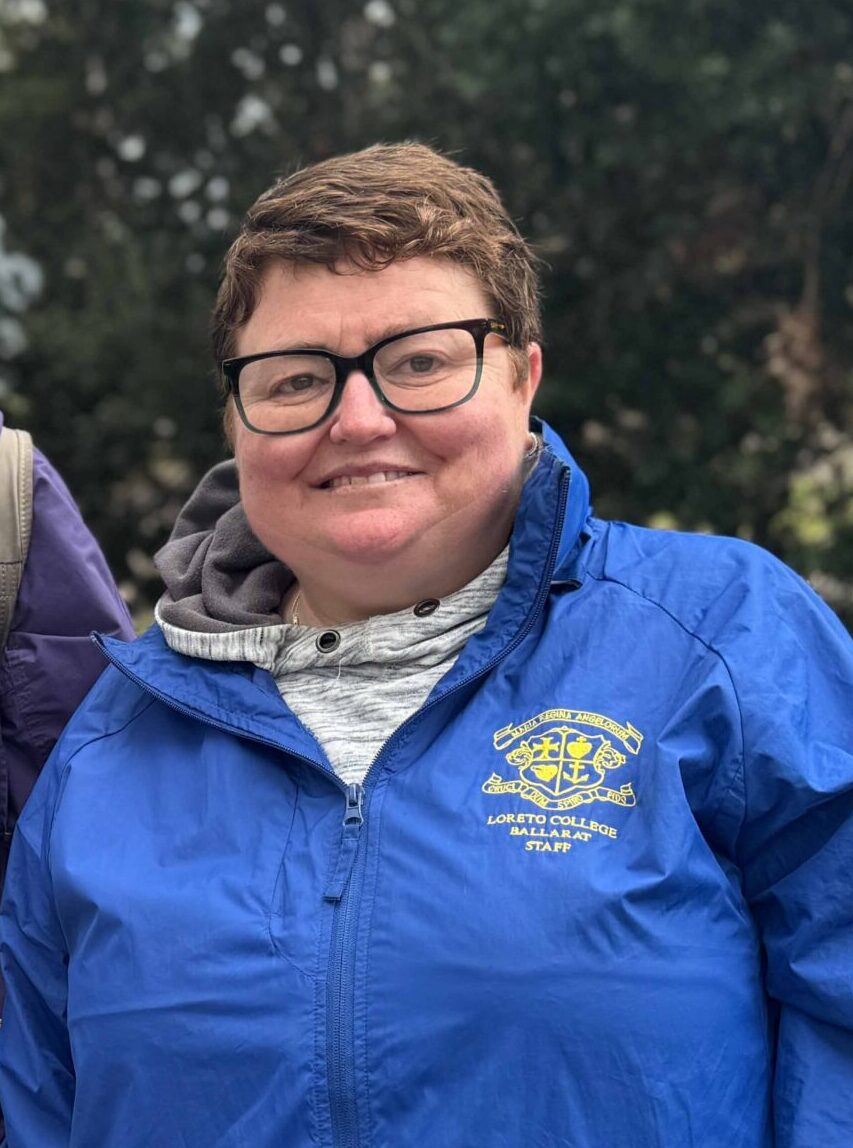
MSS Archivist, Julia Walsh. Photo: Fiona Basile
Archives are living; they are never finished. They relate to story and inspiration today. Sometimes a question or topic will arise that sends you back into the archives to understand where it came from. That topic may never have been explored before, but the material is there to discover. In that sense, archives are always alive. Each time you return to them, they can reveal something new, depending on what you are seeking to understand more deeply.
There is always more work to be done because the work is detailed, with projects within projects, and it takes time. It also takes a team—our skilled assistant and co-worker, Julia Walsh, who among other aspects currently records and documents the items into an archival system, which requires a whole numbering process and written descriptions. The archival task is complex. So, when asked, “Is it finished yet?” I say, never.