Journey to Aboriginal massacre sites in south-west Victoria, 27–29 March 2026
Understanding our history means being willing to look beyond the stories we have inherited, to acknowledge those that have been overlooked or left untold, and to listen to the voices and experiences of First Nations peoples.
For Missionary Sisters of Service Bernadette Wallis and Stancea Vichie, a shared interest in family history gradually opened up deeper questions about Australia’s colonial past, the experiences of First Nations peoples, and their own families’ connections to First Nations Country in different parts of Australia.
Many people, including both Sisters have ancestors who arrived in Australia during the 1800s. Over the years, they have explored not only where their families came from, but when, how and why they arrived, where they travelled, and the land on which they eventually settled.
Their research also prompted them to consider the much longer history of the country on which their ancestors settled — land that had been home to First Nations peoples for tens of thousands of years before European settlement.
As their understanding deepened, so too did their desire to acknowledge the painful histories associated with colonisation, particularly the massacres of Aboriginal people across Australia.
For Stancea, this growing awareness had led her, over many years, to build a small library of resources to share with others, helping to deepen understanding of colonisation and its impacts on First Nations peoples. This journey together of discovery and building relationships with First Nations peoples has been a wonderful time of healing and moving forward together for the good of all people in this beautiful land.
Bernadette, too, had been reflecting on the gaps in her own understanding of Australia’s history. Growing up, there was nothing in her educational curriculum about Aboriginal history, she explained, nor did she understand the presence and experiences of First Nations people in the places around her. While her awareness has grown through many years, she had noted there was a silence she had become increasingly conscious of.
These personal experiences and their shared desire to better understand Australia’s colonial history had prompted conversations between the two women about visiting and honouring Aboriginal massacre sites.
“Being very conscious of our colonial history in Australia, we talked several times in recent years about doing a pilgrimage of Aboriginal massacre sites,” Bernadette explained. “It is important to me that I go on Country, be present, listen to the land, and the stories of First Nations people and of what has happened in the various places of where Aboriginal people were killed.”
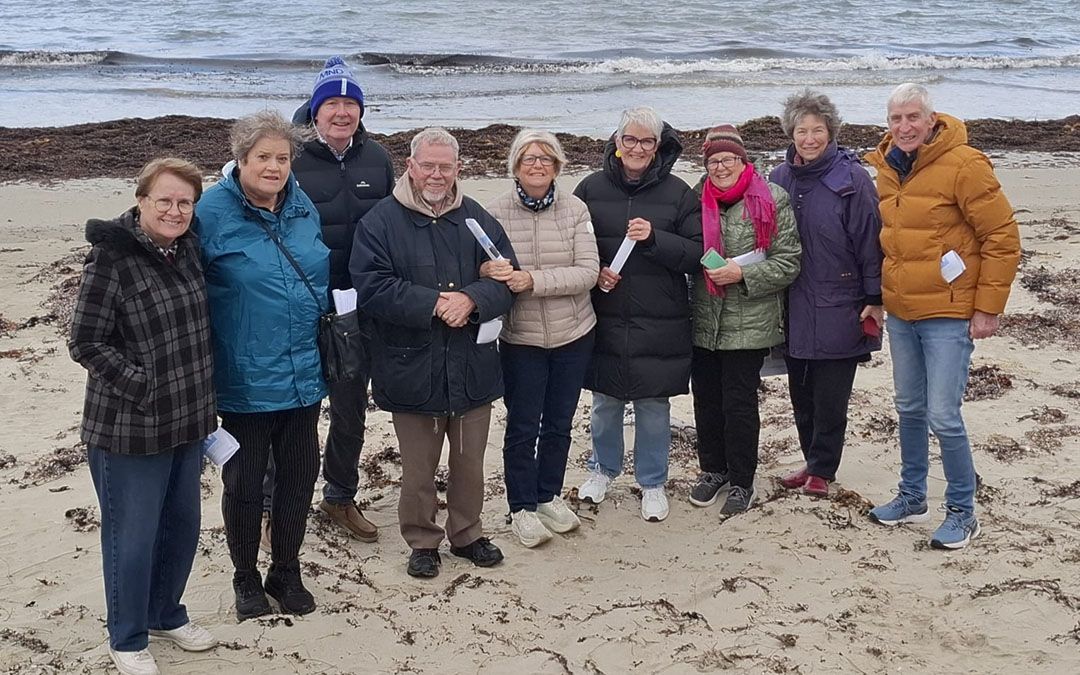
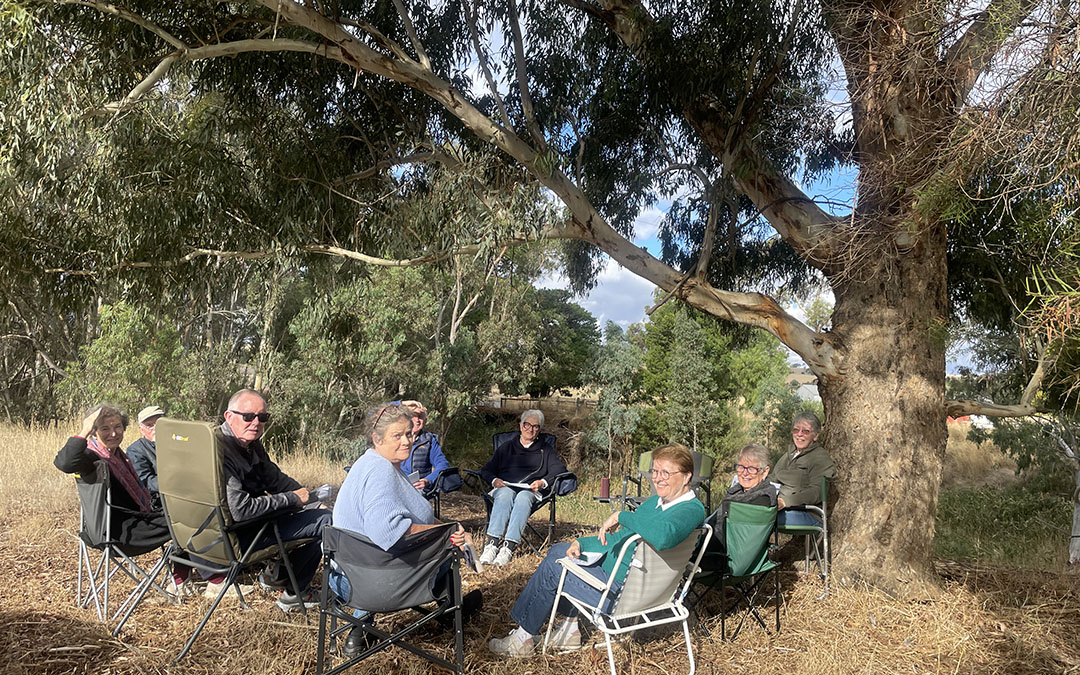
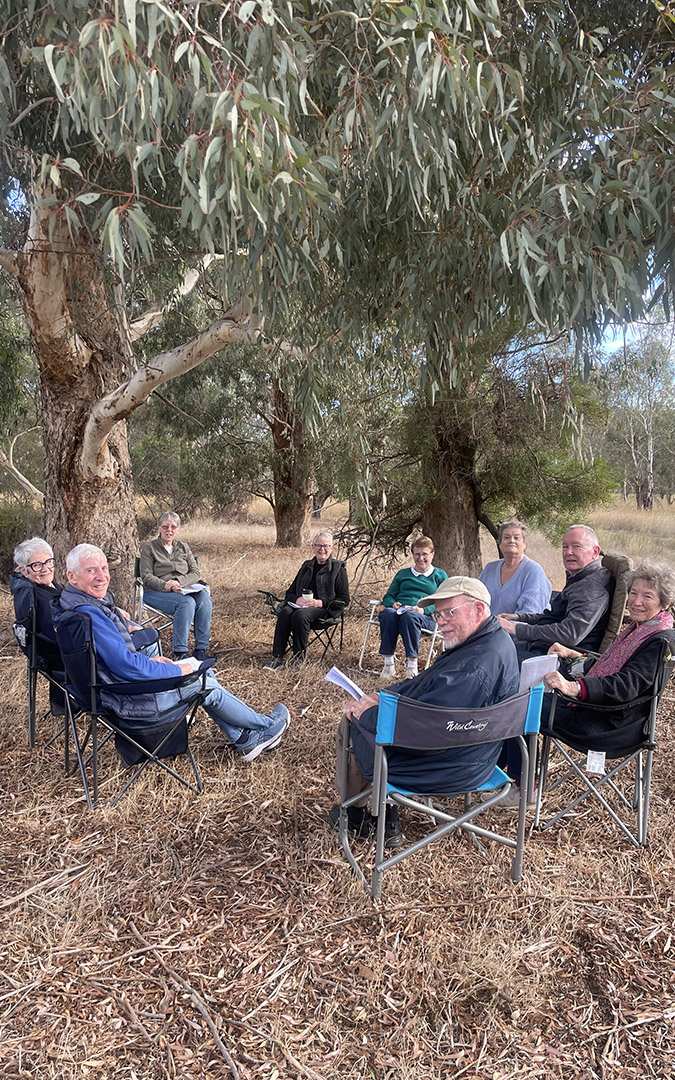
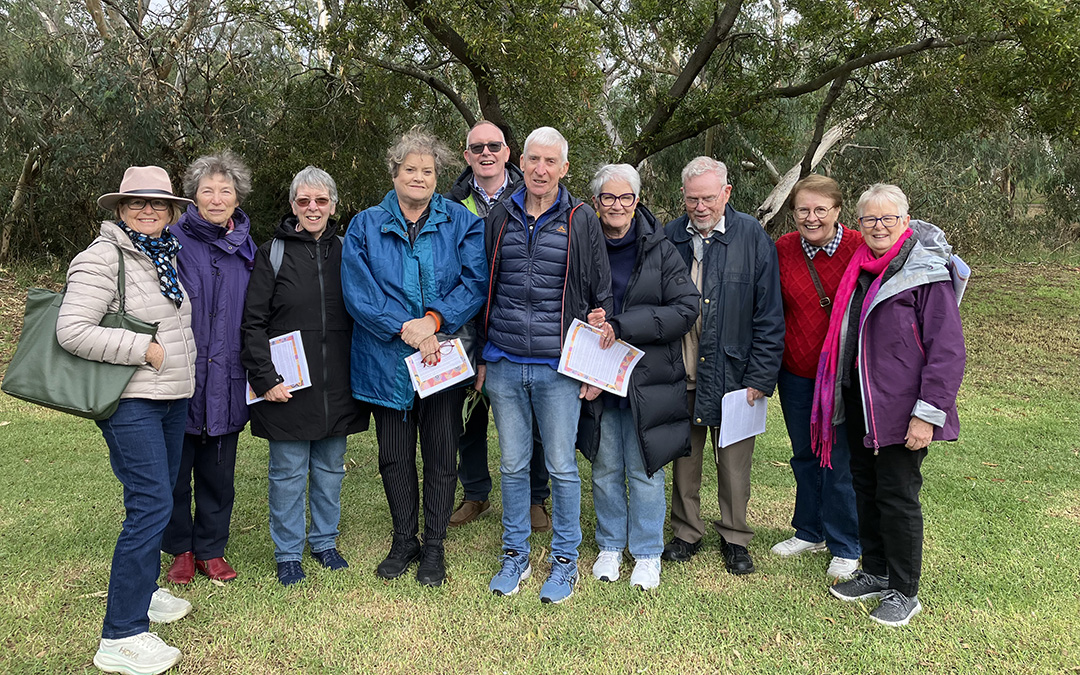
From left, Mary Burke FMM, Catherine Carr, David Alcock, Fr Bruce Duncan CSsR, Jane Bertelsen, Marg Cooper, Bernadette Wallis MSS, Stancea Vichie MSS and Den Cooper. Photo by Liz McAloon.
During the Christmas and New Year holidays, Bernadette decided it was time to begin this journey. When she shared her intentions with Stancea and other friends, they too were inspired by the possibility of making the pilgrimage together.
And so, from 27–29 March 2026, a group of ten pilgrims — two Missionary Sisters of Service and friends of the MSS — travelled through south-west Victoria to visit six Aboriginal massacre sites. Joining Bernadette and Stancea were Fr Bruce Duncan CSsR, Den and Marg Cooper, Liz McAloon, Catherine Carr, Mary Burke FMM, David Alcock and Jane Bertelsen.
This was a collaborative endeavour. Bernadette chose the massacres sites in Victoria’s Western District, with Den Cooper undertaking the bulk of primary research and providing the reflection prompts at each site. Liz McAloon produced the reflection materials and created the itinerary, identifying locations on or close to each massacres site where we could gather.
Being present on Country
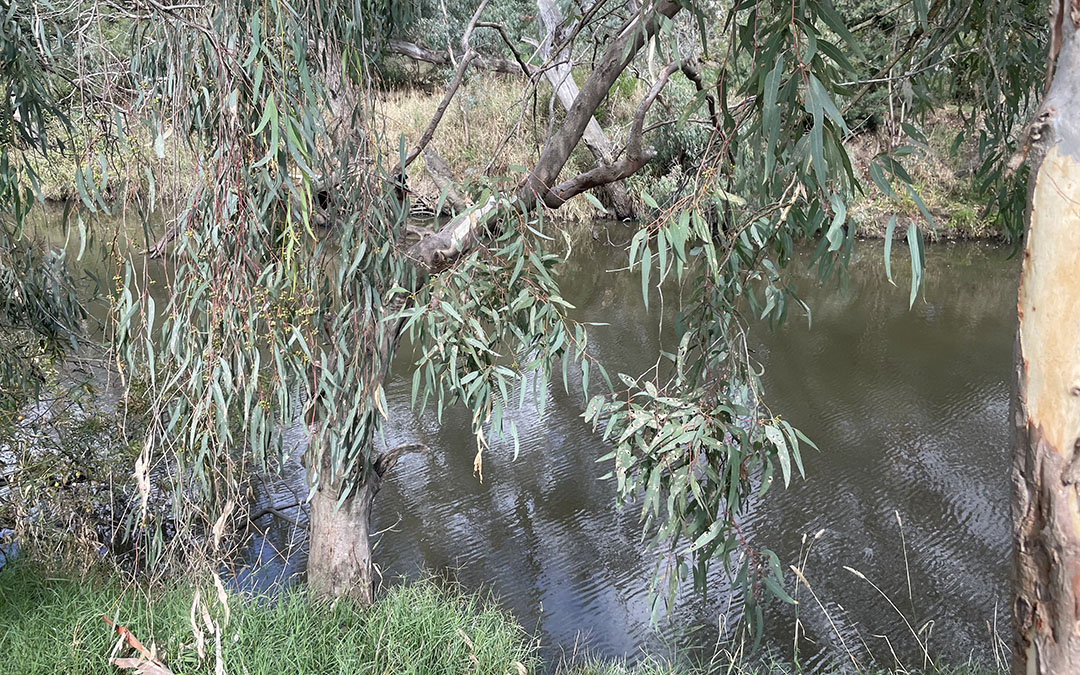
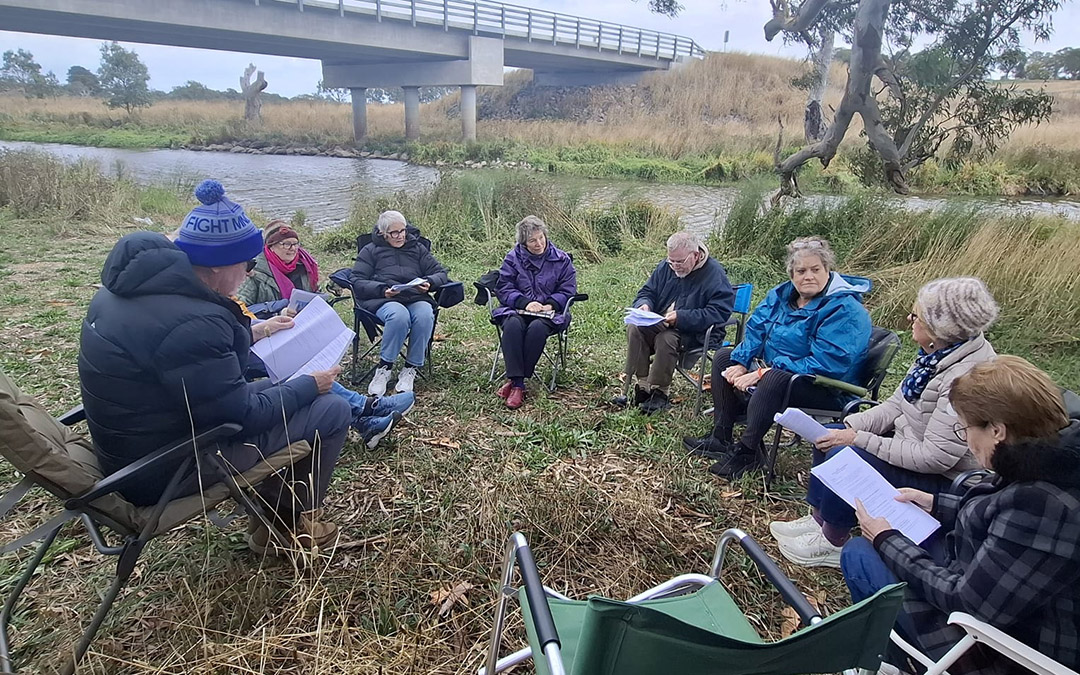
The pilgrimage began on Friday 27 March, with a gathering beside the Barwon River (Barre Warre Yulluk) at Winchelsea, on Wadawurrung Country.
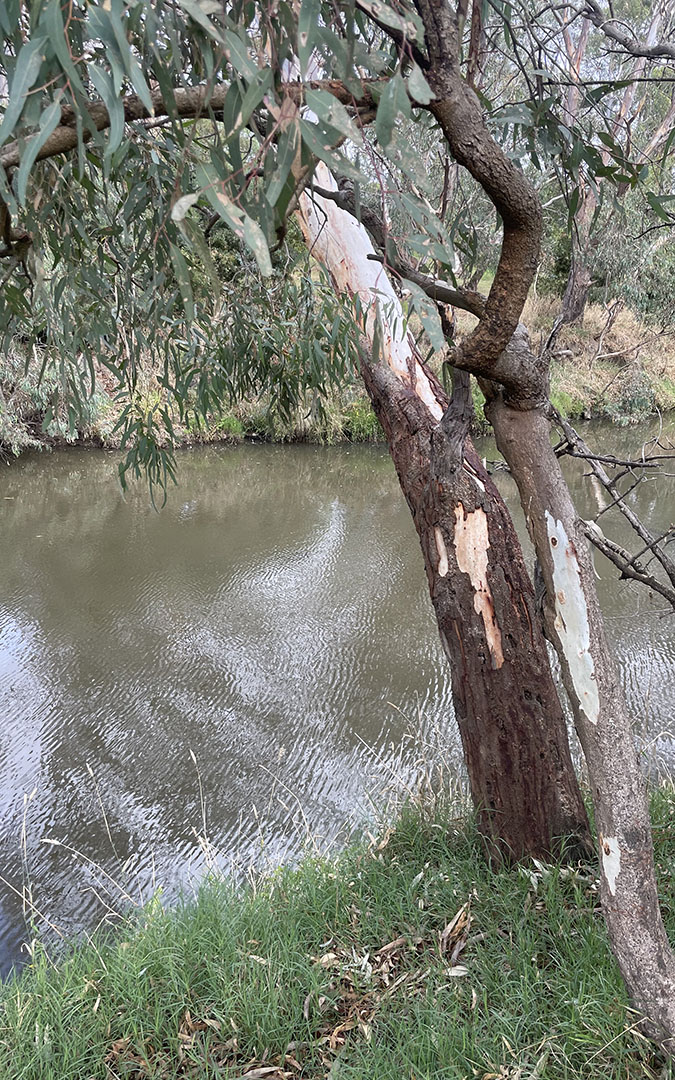
Barwon River (Barre Warre Yulluk). Photo by Liz McAloon
Participants were invited to consider their own connections to place and reflect on some important questions: Whose Country do I stand on? What do I know of the First Nations people who have lived here for countless generations? Why have I come on this pilgrimage?
These questions would accompany the group throughout their journey.
After travelling through Camperdown, the pilgrims visited their first massacre site at Murdering Gully, beside Mt Emu Creek near Glenormiston. Here, Aboriginal men, women and children were killed in an attack organised in retaliation for the killing of sheep on Glenormiston Station.
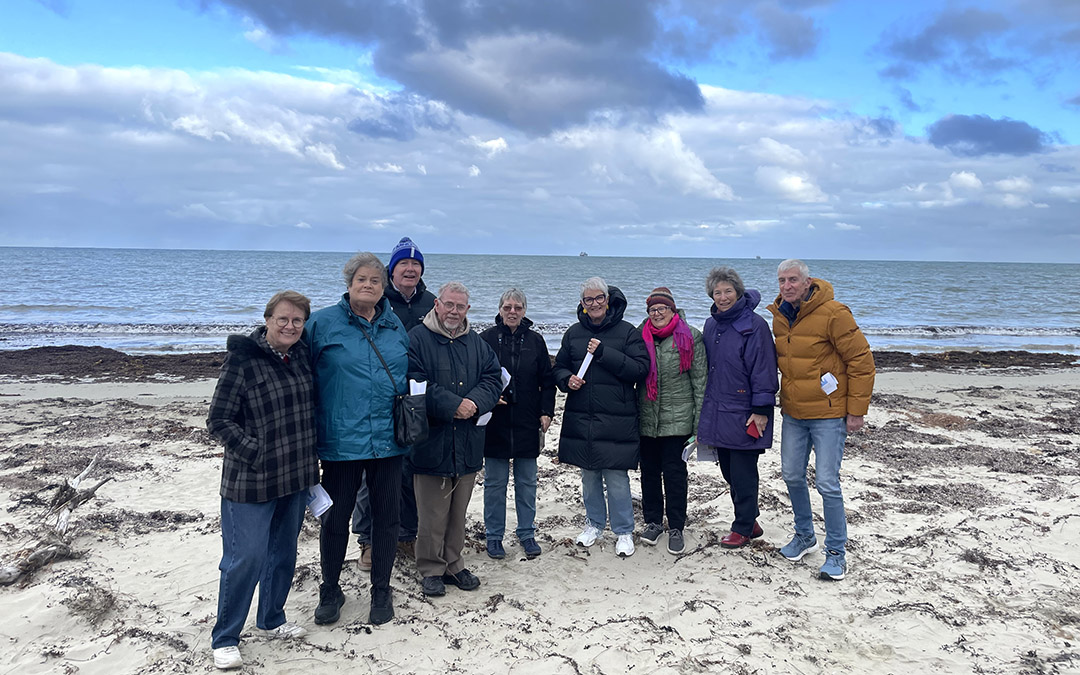
Later that afternoon, they travelled to Convincing Ground, near Portland, where Kilcarer Gundidj people were massacred by whalers in the 1830s following a dispute over a beached whale. The site also carries a story of continuing truth-telling, with local Aboriginal community members having successfully advocated for its protection.
Listening to the stories of the land
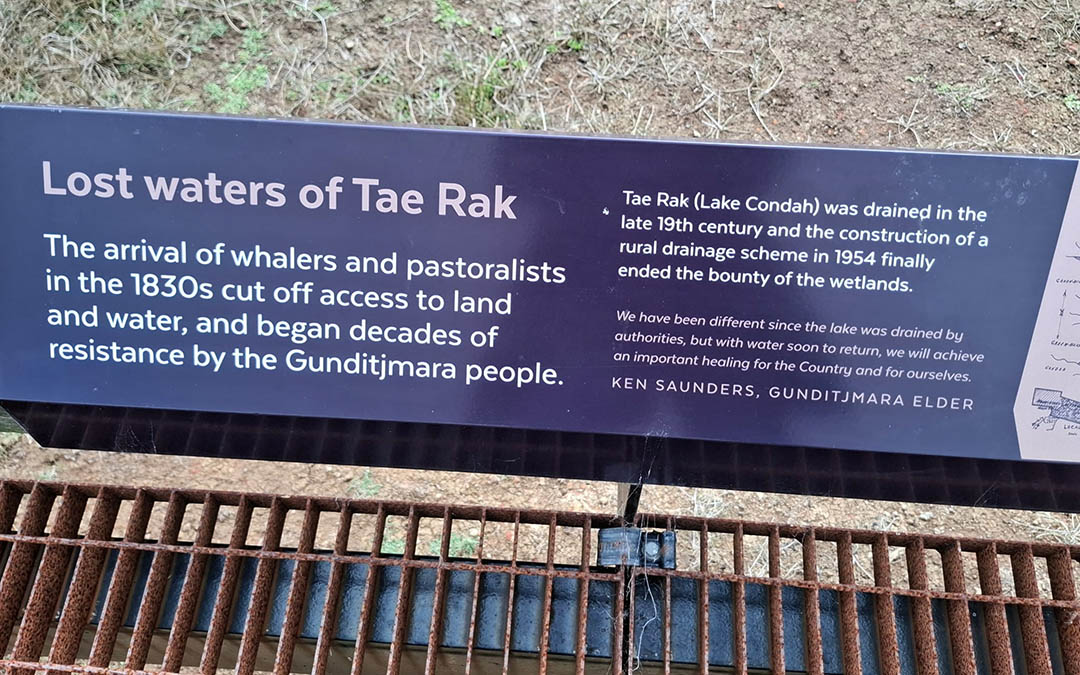
On Saturday 28 March, the pilgrimage continued through Gunditjmara Country, beginning at Budj Bim National Park and Murderers Flat, near Lake Condah Mission.
The history of this massacre has been preserved through the oral accounts of Gunditjmara people, including stories of survivors who hid among reeds to escape the violence.
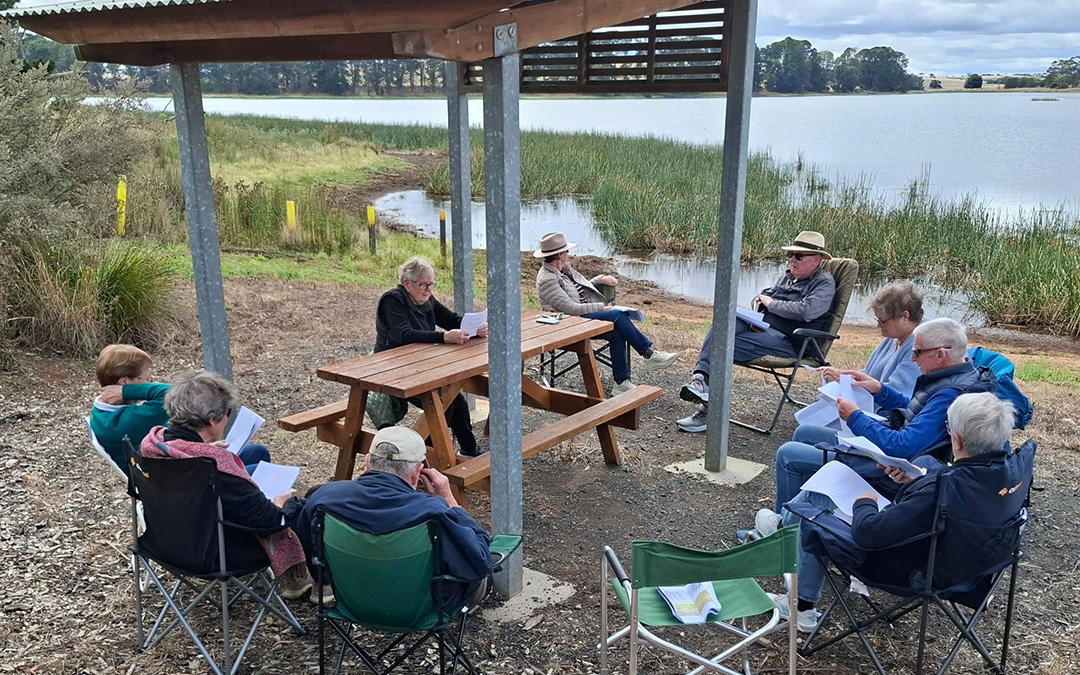
Pilgrims take time to reflect at Konogwootong Reservoir, near Coleraine.
The group then travelled to Konongwootong Reservoir, the site of the Fighting Waterholes massacre, where a designated ‘Quiet Place’ now provides space for respectful contemplation and remembrance. Their fifth site was Fighting Hills, near Coleraine, where at least 40 Aboriginal people were killed in March 1840 following accusations of sheep theft.
At each location, the pilgrimage reflections invited participants to pause, observe the landscape, listen to the historical accounts and consider their responses.
What do I see, hear and feel? What comes to my mind and heart? How is the truth-telling of this story impacting on me?
These moments of listening and reflection were central to the pilgrimage’s purpose: to acknowledge the violence of colonisation and deepen awareness of the lives, cultures and Country of First Nations peoples.
A sacred journey into Holy Week
The final day, Sunday 29 March, was Palm Sunday, marking the beginning of Holy Week.
Following Mass at St Mary’s Church in Hamilton, the pilgrims travelled to their sixth and final site, Thanampool Thookay Creek at Caramut. Formerly known as Lubra Creek, the waterway was officially renamed in 2024 to honour the First Nations women and children murdered there in 1842. The new name, from the Dhauwurd Wurrung language, means “women and children”.
The timing of the pilgrimage carried particular spiritual significance. As Bernadette reflected before the journey, Palm Sunday and Holy Week call Christians to journey together in a suffering world, while holding the hope of liberation and new life expressed in the Easter story.
The pilgrimage also drew inspiration from the Uluru Statement from the Heart, particularly its invitation to walk together towards a more truthful and just future.
Continuing the journey
As the pilgrimage drew to a close, participants were invited to reflect on what they had encountered and what the experience might ask of them.
How hopeful are we that Australia can achieve genuine reconciliation between Aboriginal and non-Aboriginal Australians? What might this experience be asking of me?
For Bernadette, Stancea and their fellow pilgrims, this first journey offered an opportunity to be present on Country, listen to difficult histories, remember those whose lives were taken, and consider their own place in Australia’s continuing journey of truth-telling and reconciliation.
In Bernadette’s words, it was an invitation to “acknowledge Country with love” and remain open to the healing and transformation that may emerge. It was a journey of remembrance, listening and hope.
Photos courtesy Liz McAloon.
-
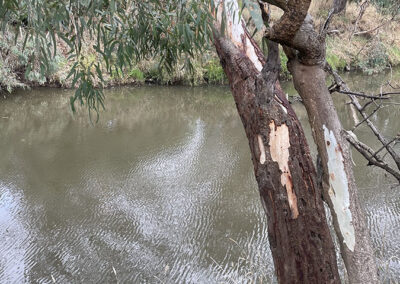
Barwon River, Winchelsea
-
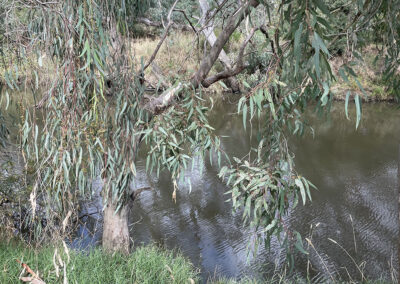
Barwon River, Winchelsea
-
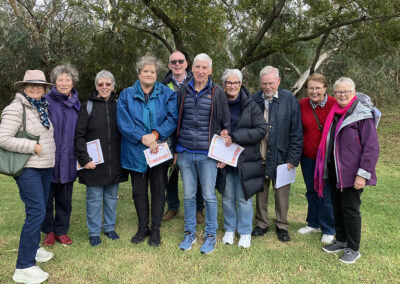
Pilgrims gather at Winchelsea
-
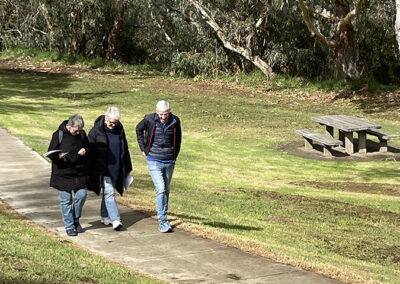
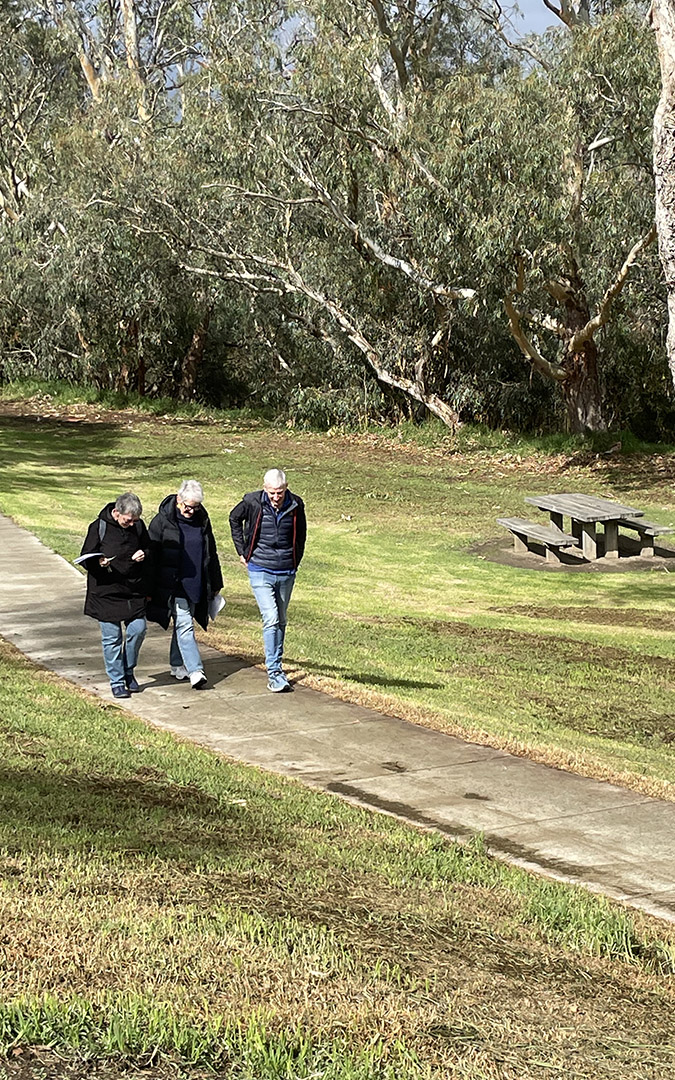
Den and Marg Cooper and Jane Bertelsen walking and reflecting
-
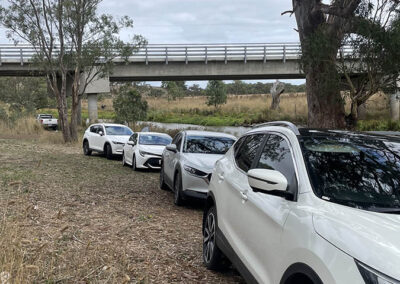
Mt Emu Creek, Puuroyup, now Glenormiston
-
Mt Emu Creek, Puuroyup, now Glenormiston
-
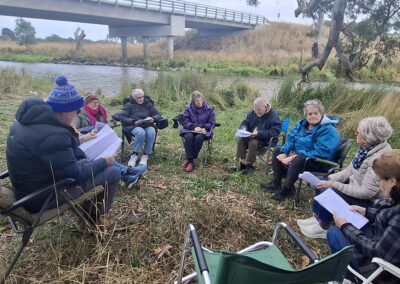
Pilgrims gather at Mt Emu Creek, Puuroyup, now Glenormiston
-
Mt Emu Creek, Puuroyup, now Glenormiston
-
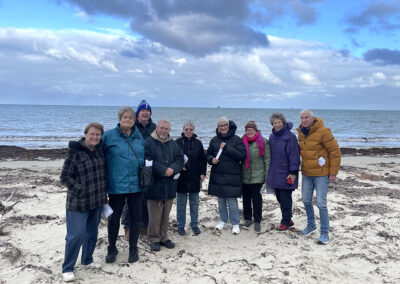
Pilgrims gather at site of massacre at Portland
-
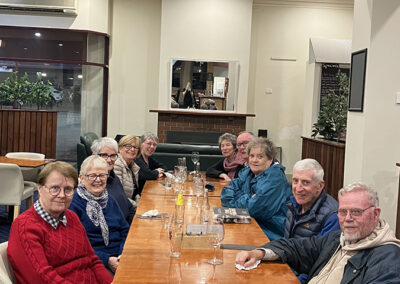
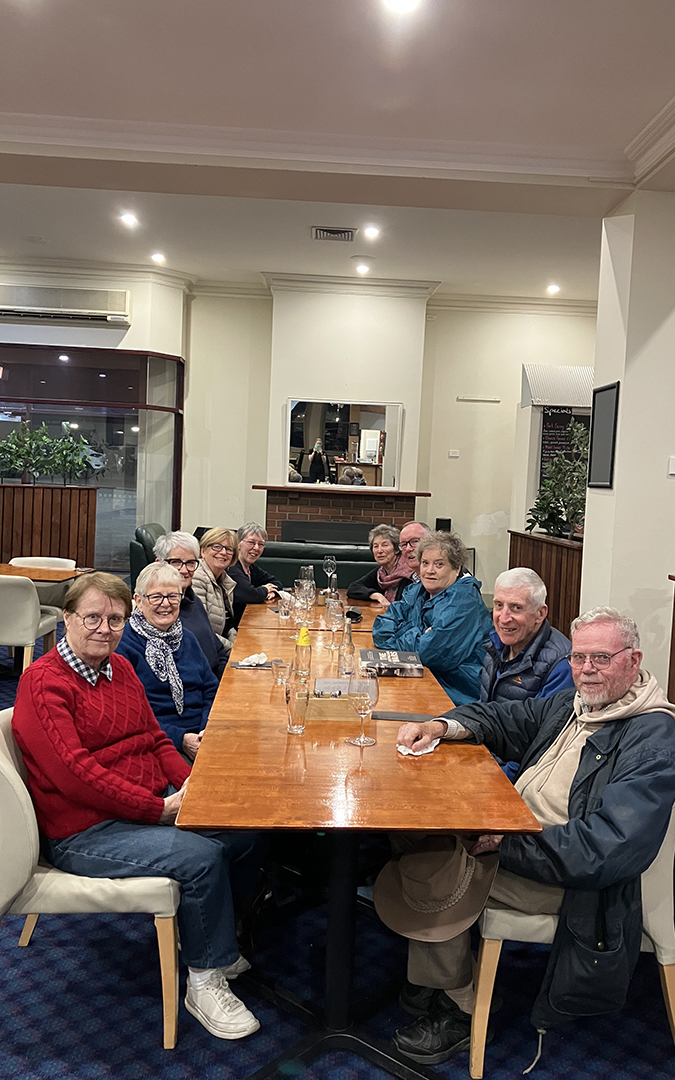
Pilgrims gather for a meal in Portland
-
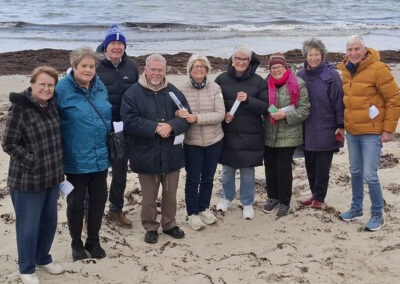
Pilgrims at site of massacre, Portland
-
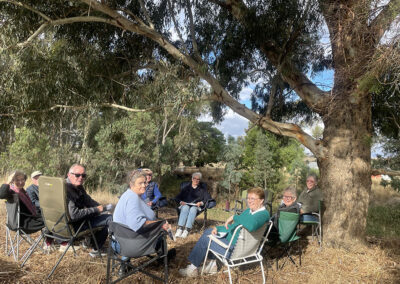
Pilgrims gather at Darlots Creek, near Lake Condah
-
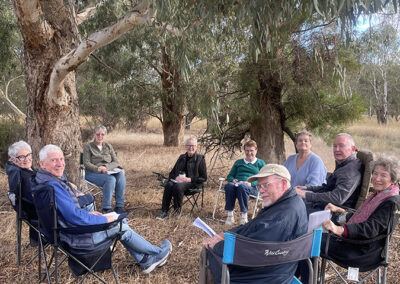
Pilgrims gather at Darlots Creek, near Lake Condah
-
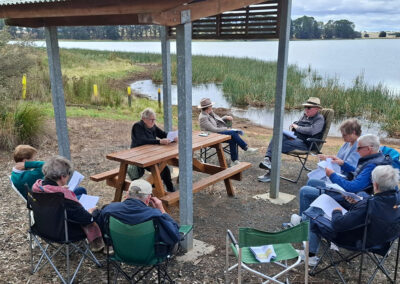
Pilgrims gather at Konongwootong Reservoir near Coleraine
-
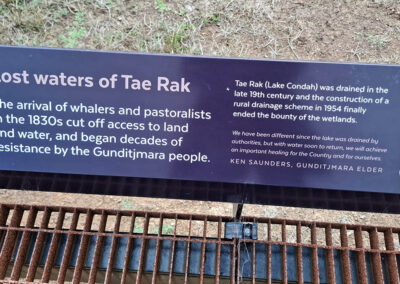
Budj Bim, near Lake Condah
-
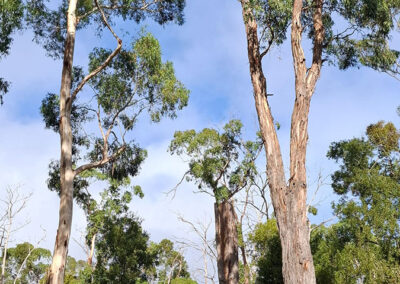
Budj Bim, near Lake Condah